
Good printed editions are essential, but manuscripts are irreplaceable […] Only through them can we feel really close to the creators of these works “
András Schiff
The above quote is Sir Andras Schiff’s response to the question:
❔”Why do we really need facsimiles?”
I’m working with a student on Schumann’s Pappilons this week, and came across this facsimile in my library of editions.
Facsimiles are copies of a composer’s original sketch, and they provide tremendous insight into stylistic aspects of a composition.
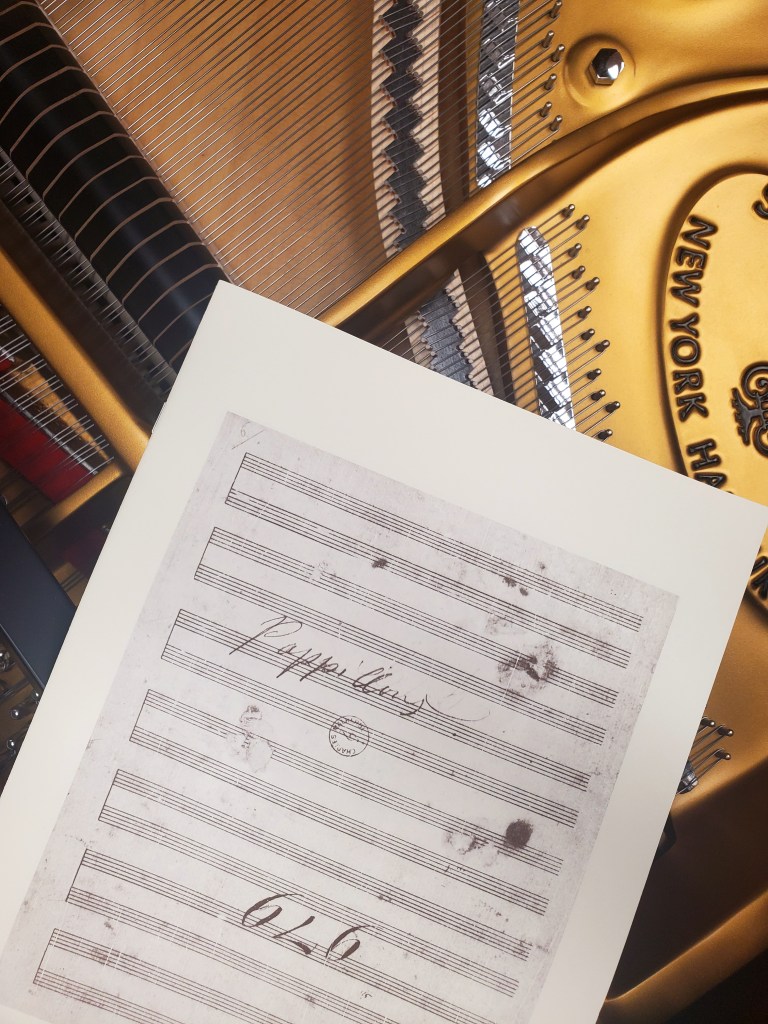
Fascimile of Schumann’s Op. 2 Papillons taken from Wiener Urtext Edition, Photo by Evgenia Rabinovich
They also shine a light on the work’s history, and the (oftentimes) numerous revision that a single work can go through.
Works are often republished while undergoing these revisions, which results in multiple copies with wide variations between them. Changes can include notes, rhythms, repeats, and other compositional details.
Make no mistake – this doesn’t not meant that the original edition was published with mistakes.. that’s unlikely to be true.
Although false editions do exist, they are more likely to show up later on, through poor editing, careless reprints, and forgery…
But composers do change their minds, and reprints are often authentic!
In short, doing your research can make a big difference!
A particularly great example of this is Schumann’s Papillons.
I spent time looking at several editions of this score today, and discovering the differences between the autographs and some of the later publications can be enlightening. For one, studying these editions can explain the variations between recordings of the piece.
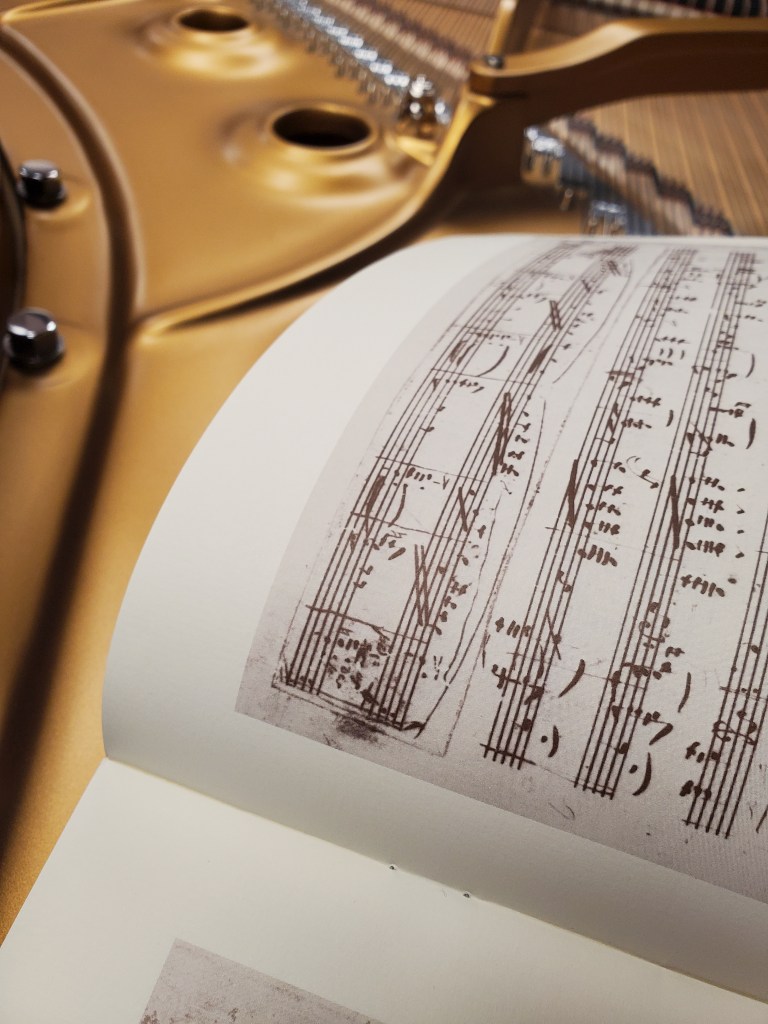
There is, to be honest, no one correct version of Papillons. There are, instead, multiple edited editions published with slight variations that look meaningless on paper but can have dramatic consequences in performance.
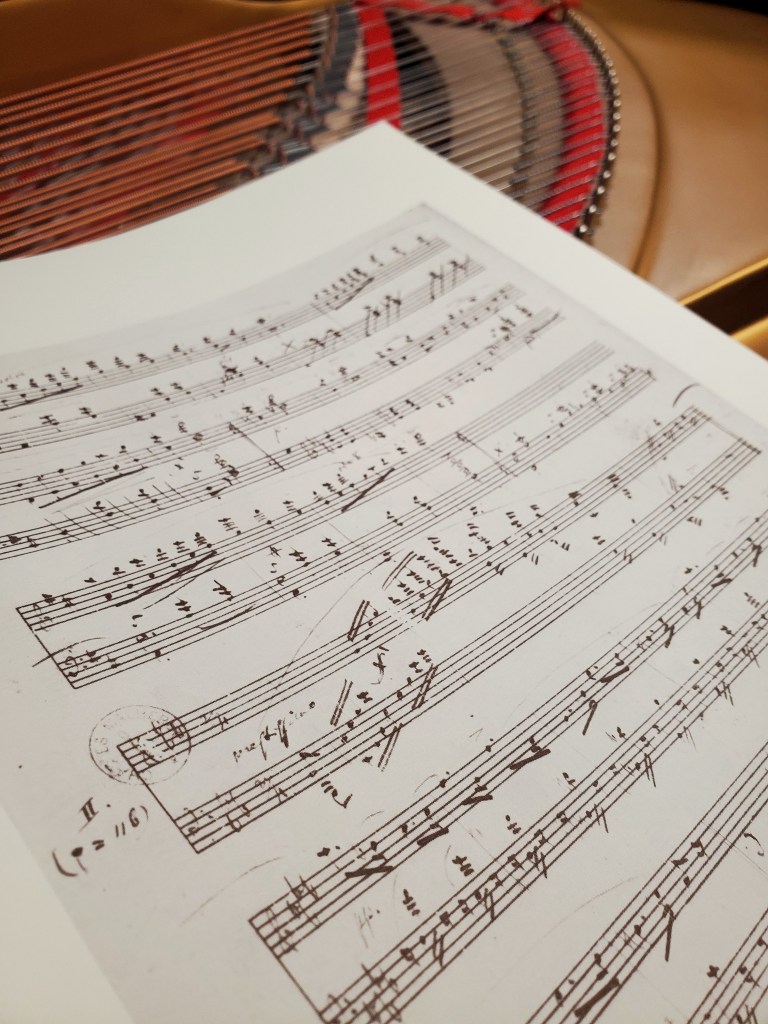
A good example of this is the second short piece from Papillons, marked prestissimo, which begins (traditionally – an in the first autograph) on an eighth note. However, the posthumous publication of the work has the first B-flat changed to a sixteenth.
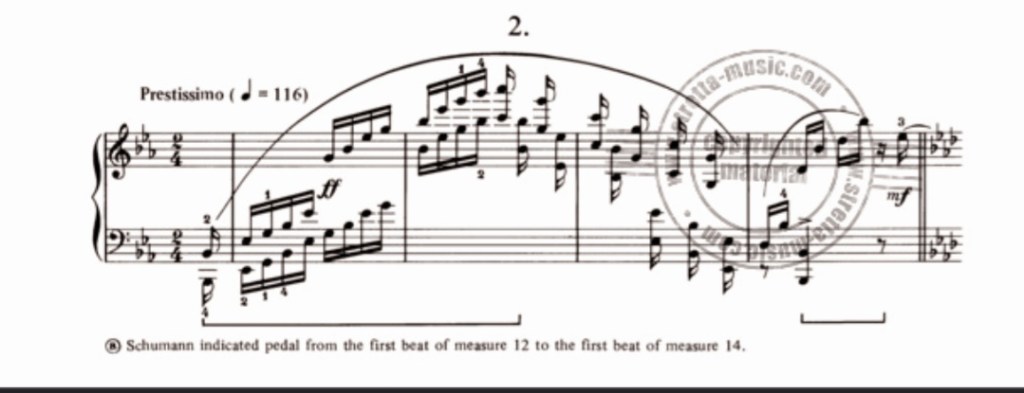
But that’s far from the only difference! Besides this, there are displacements in dynamic markings (the autograph has pp in measure 5 but the first edition has mf in 5 and pp in 9). But perhaps the most interesting change from the autograph to the later publication is the Da Capo marking and the addition of the ossia stave (providing an alternate way of playing the ending).
In the original autograph, the Da Capo is present (although, with ambiguous placement…) and the ossia (alternate notation) is not. But the Da Capo mysteriously disappears in one of the later publications, and without evidence of the source of the change.
But what do recordings tell us?
We can undoubtedly learn a lot from listening to recordings. Exploring those by some of the piano world’s most respected masters can often be an exciting process of discovery.
If you listen closely to different pianists’ recordings of Papillon, you will notice variations in repeats, and specifically.. who takes them, when, and why.
Most obviously, are at least six variations in the way that the Da Capo is interpreted by different artists in this second miniature.
1. Playing the ossia and the da capo measure 1 (Arrau does this)
2. Playing the ossia but no da capo (Freire does this) (also, Richter)
3. Playing the ossia and the da capo from measure 5 (Perahia does this) (also, Schiff, Demus)
4. Playing no ossia but the da capo from measure 1 (Frankl does this) (also, Ashkenazy)
5. Playing no ossia and no da capo from measure 5 (Rubinstein does this)
6. Playing no ossia but the da capo from measure 5 (Kempff does this)
Is there a right version? I have my preferences, and my reasons.
Personally, I prefer taking the repeat from measure 5 and playing the ossia on the second take. It seems oddly out of place to me to play the introductory upwards run in measures 1-5 more than once, so I would lean to agreeing with Perahia and Schiff in their interpretations.
However, the truth is that certain variations are acceptable, and each arguably has it’s place. By exploring differences in recordings and scores, we learn that there are often more than a handful of brilliant, educated, and convincing interpretations of the same music, and all have their own validity.
Whatever your preferences in pianistic interpretations may be, doing your research by exploring urtext editions and comparing them to additional publications and existing autographs can be instrumental in making an educated and compelling performance choice.
 tone&temperament